
Shoulder
Post Op.
Shoulder Operations
Post-Op Information.
Following your post-operative instructions is an important part of achieving a safe and effective recovery. Your body needs appropriate time to heal, and carefully following the guidance below regarding returning home, pain management and possible complications can help support a smoother and quicker recovery. Please contact our rooms if you have any questions, concerns or experience any unexpected or immediate complications following your procedure.
-
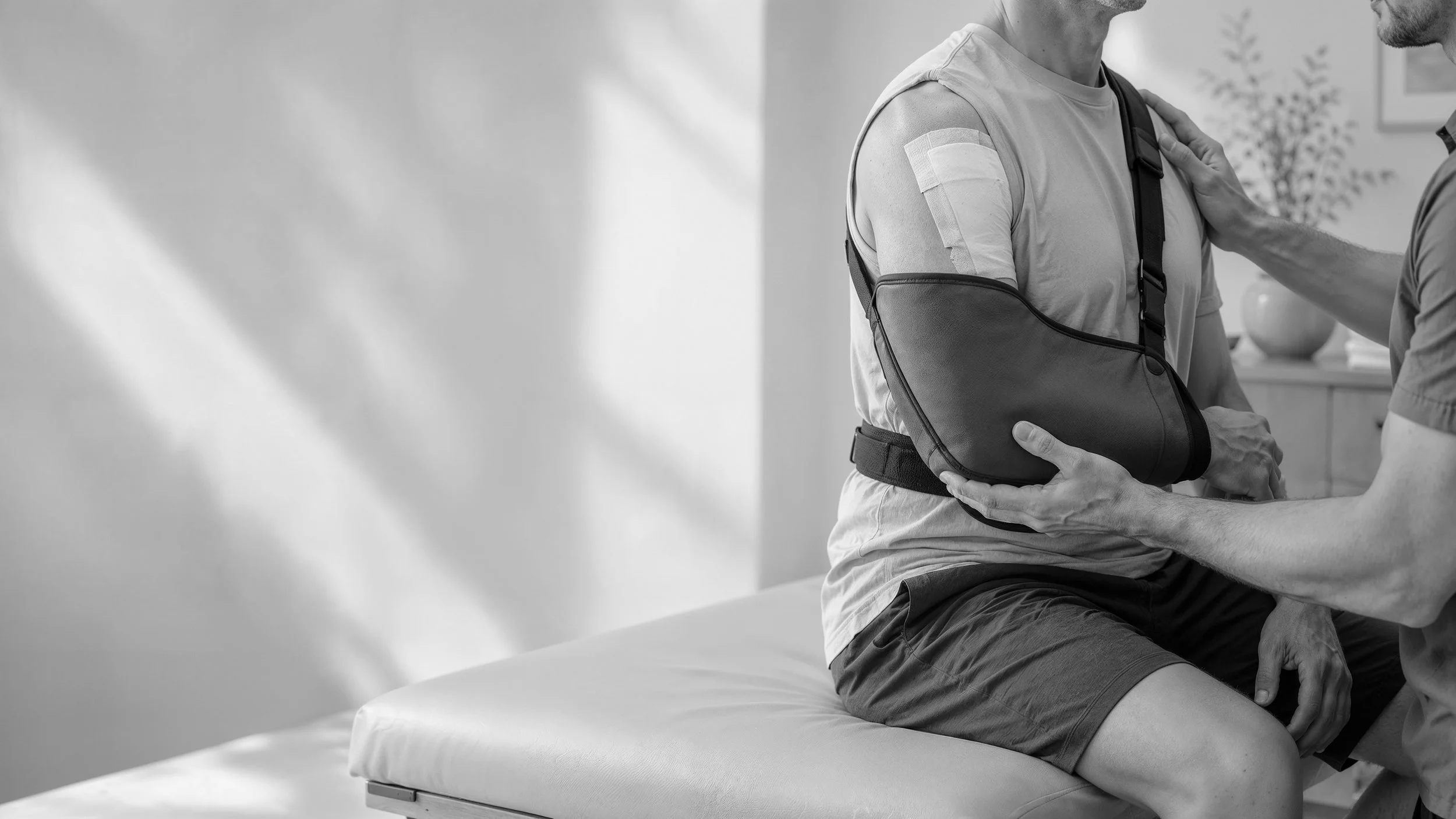
Wear your sling for the first six weeks following surgery, removing it only for showering and prescribed exercises. When lying on your back, support the operated elbow with a folded towel. Keep the wound dry for the first two weeks and avoid swimming or using a pool for four weeks. During this early stage, do not actively lift the operated shoulder or use the arm to support your body weight, push or pull. Continue moving your fingers, wrist and elbow, and complete only the gentle passive exercises provided by your surgeon or physiotherapist.
-
Some pain and swelling are expected during the early stages of recovery. Regular icing and your prescribed anti-inflammatory medication can help manage these symptoms while the wound heals. It is important to protect the shoulder and avoid progressing your exercises too quickly. During the first six weeks, exercises should remain passive, meaning the operated arm is moved with assistance rather than lifted under its own power. From six weeks, movement and early strengthening can be gradually introduced under the guidance of your physiotherapist, with lifting restricted to approximately 500 grams until advised otherwise.
-
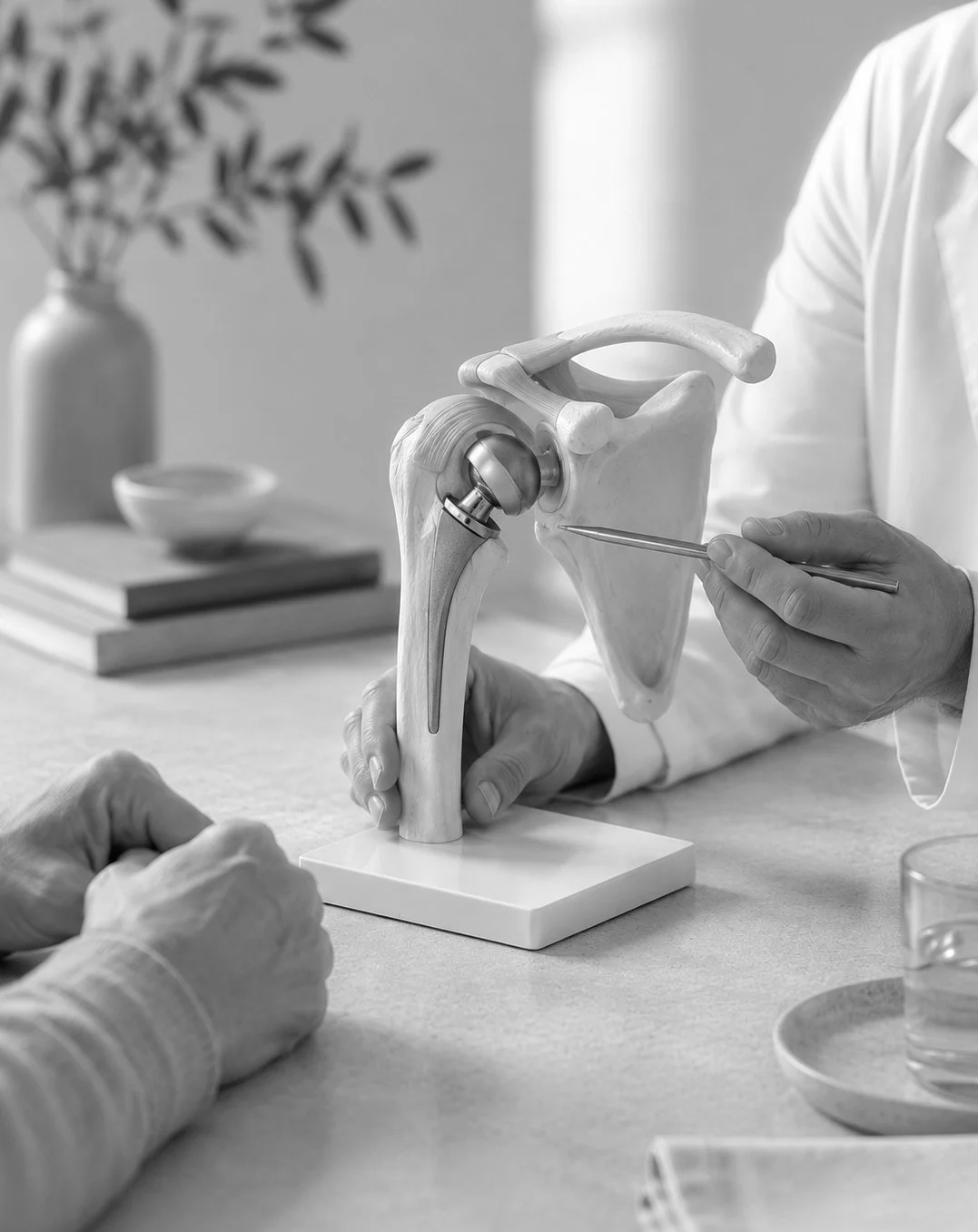
One of the main priorities following reverse shoulder replacement is protecting the new joint from dislocation. For the first 12 weeks, avoid movements that place the arm behind your back, across your body or into a position of combined inward rotation and extension. Do not push yourself out of a chair using the operated arm, support your body weight through it or perform forceful pulling and pushing. Please contact our rooms if you notice increasing pain, swelling, wound concerns or difficulty completing the prescribed rehabilitation program. Your recovery plan may need to be adjusted if complications arise or healing progresses more slowly than expected.
-
Recovery following reverse shoulder replacement occurs gradually and should be guided by your surgeon and physiotherapist. The sling is generally reduced from six weeks, followed by a gradual return of active movement and early strengthening. More advanced strengthening, endurance work and functional use of the arm usually begin after 12 weeks, with a gradual return to gym and recreational activities around four to six months. Progress varies between patients, so follow your individual rehabilitation plan carefully. Please contact our rooms if you have questions about your sling, wound care, exercises, movement restrictions or expected recovery.
Shoulder Replacement:
Rotator Cuff Surgery:
-
You may usually return home the day after surgery once your pain is adequately controlled. Wear your sling continuously for the first six weeks, including while sleeping, and do not remove it until the nerve block has completely worn off. Begin gentle finger and wrist movements from the day after surgery, and loosen the sling three to four times daily to straighten your elbow while keeping it close to your side. The wound dressings are waterproof, so you may shower carefully with the water directed away from the operated shoulder. Replace any dressing that becomes wet or falls off, or contact our rooms for assistance.
-
The nerve block generally provides effective pain relief for approximately 8 to 16 hours, with feeling gradually returning from the fingertips towards the shoulder. For the first two weeks, take regular paracetamol or Panadol Osteo and your prescribed anti-inflammatory medication. Endone may be taken as required, but use the smallest amount needed to manage your discomfort. Sleeping can be difficult after rotator cuff surgery, and many patients are more comfortable in a semi-reclined position or supported by additional pillows. Your pain management will be reviewed at your post-operative appointment approximately two weeks after surgery.
-
The nerve block can occasionally cause temporary breathlessness by weakening the diaphragm on the operated side. It may also rarely cause a dilated pupil and mild blurred vision. These symptoms should resolve when the block wears off, but you should inform your nurse if they occur. It is also important to protect the repaired tendon by wearing your sling and completing only the exercises you have been cleared to perform. Passive shoulder movements may begin after your two-week appointment, although this can be delayed for larger tears. Avoid lifting more than one kilogram between weeks six and twelve, and do not begin resistance exercises or swimming before you have been advised it is safe.
-
Your first post-operative appointment will usually occur at approximately two weeks to check your wounds, review your pain and discuss the surgical findings. Physiotherapy will then gradually progress from passive movement to active use of the arm and, after approximately 12 weeks, strengthening exercises. Driving is usually possible around seven to eight weeks, once you can comfortably lift and hold your arm at shoulder height and feel your reactions have returned to normal. Most recovery occurs within the first six months, although improvement can continue for up to 18 months. Please contact our rooms if you have questions about your sling, dressings, medication, exercises, driving or expected recovery.
Shoulder Arthroscopy:
-
Wear your sling most of the time for the first three to five days to support the shoulder and help manage pain. It may be removed for showering, and once your discomfort allows you can begin light activities at waist level. Avoid lifting and strenuous activity for at least the first three to four weeks. Begin gentle finger and wrist movements from the day after surgery. Your dressings are waterproof, so you may shower carefully with the water directed away from the operated shoulder. Replace any dressing that becomes wet or falls off, or contact our rooms for assistance.
-
The nerve block usually provides effective pain relief for approximately 8 to 16 hours, with feeling gradually returning from the fingertips towards the shoulder. For the first two weeks, take regular paracetamol or Panadol Osteo and your prescribed anti-inflammatory medication. Endone may be taken as required, but use the smallest amount necessary to control your pain. Sleeping may be more comfortable in a semi-reclined position or with additional pillows for support. Your pain management will be reviewed at your post-operative appointment approximately two weeks after surgery.
-
The nerve block can occasionally cause temporary breathlessness or, more rarely, a dilated pupil and mild blurred vision. These symptoms should resolve once the block wears off, but let your nurse know if they occur. Some bruising and aching in the upper arm may also occur if a biceps release was performed. The bruising generally settles within a few weeks, while the muscle ache may take eight to ten weeks to resolve. Avoid lifting or activities that aggravate your pain, and contact our rooms if your symptoms worsen, your dressings become wet or you have any concerns about your recovery.
-
Your first post-operative appointment will usually occur at approximately two weeks to check your wounds, review your pain and discuss the surgical findings. Formal physiotherapy generally begins after this appointment, and you should be spending most or all of your time out of the sling. Recovery varies, but most patients have near-full movement by around eight weeks, with the shoulder taking approximately 12 weeks to fully settle. Swimming may recommence after four weeks and other activities can be gradually resumed as your pain allows. Please contact our rooms if you have questions about your sling, dressings, medication, physiotherapy or return to normal activities.
Let’s talk about your treatment.
Please contact our friendly team at The Bone + Joint Clinic, to book an appointment at our Sunshine Coast ‘Maroochy Private Hospital’ rooms. If you have any questions feel free to contact us by the details below or by filling in and submitting our online contact form.