
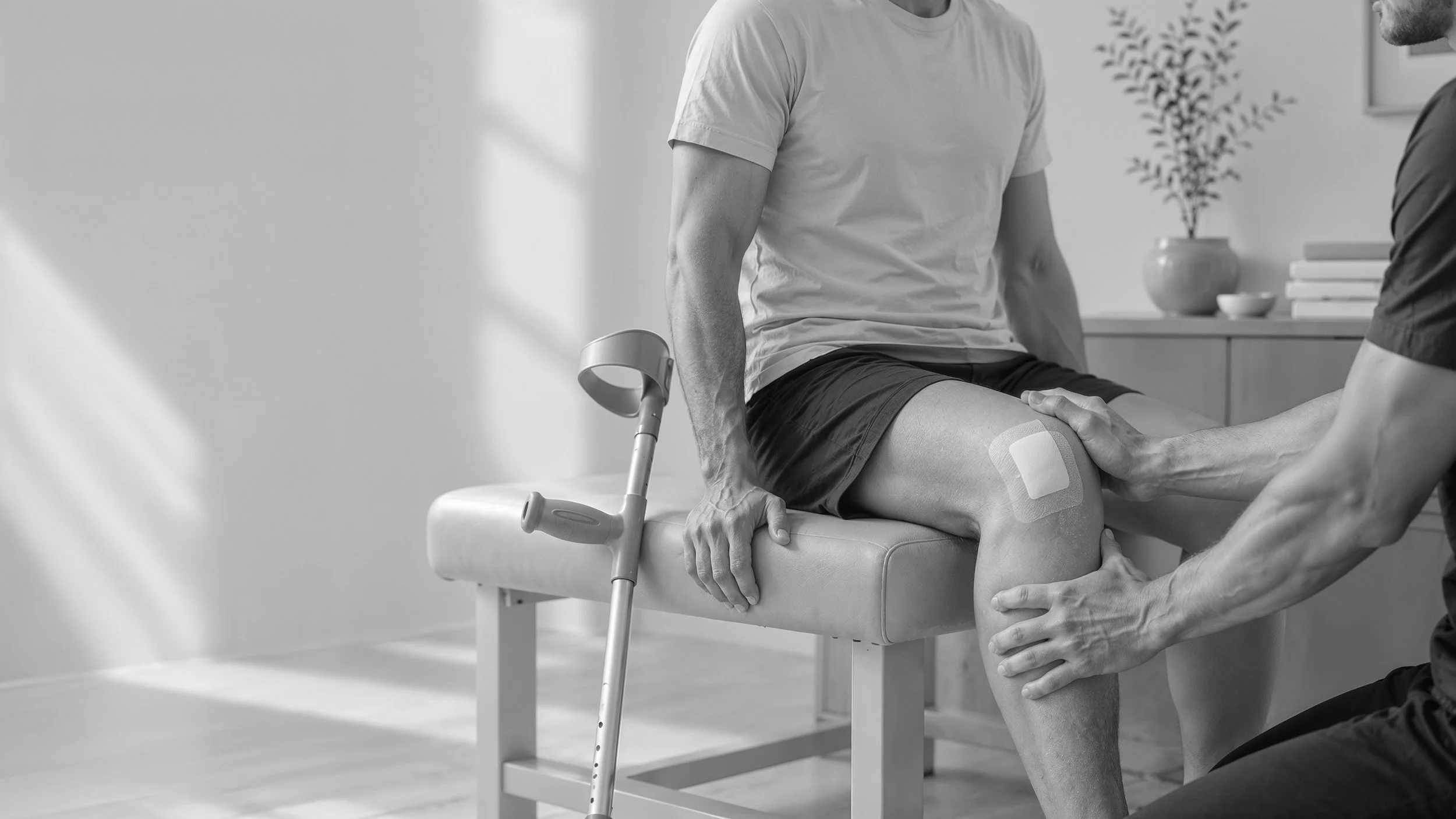
Knee
Post Op.
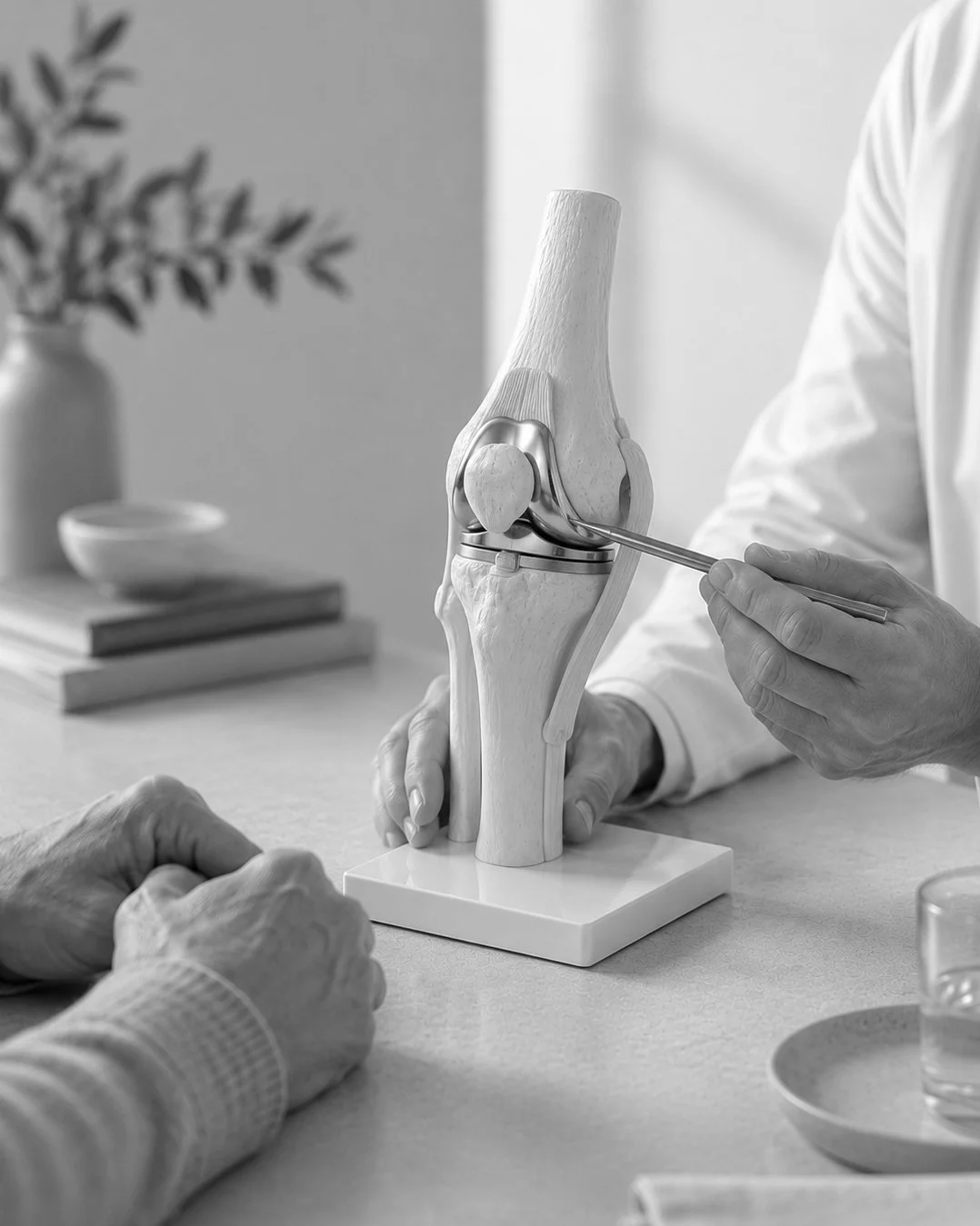
Knee Operations
Post-Op Information.
Following your post-operative instructions is an important part of achieving a safe and effective recovery. Your body needs appropriate time to heal, and carefully following the guidance below regarding returning home, pain management and possible complications can help support a smoother and quicker recovery. Please contact our rooms if you have any questions, concerns or experience any unexpected or immediate complications following your procedure.
-
You may return home once your pain can be managed with tablets, you feel confident using crutches and you have suitable support available. At home, continue taking your prescribed pain relief, keep the wound dry and shower with the dressing in place. Ice the knee regularly to help manage pain and swelling, complete your exercises and attend physiotherapy as arranged. Gradually increase your walking distance as your comfort and confidence improve. The dressing can usually be removed at approximately two weeks, often around the time of your first post-operative appointment. Once the wound is uncovered, begin gently massaging the wound and surrounding tissues three to four times each day. Bathing and swimming may resume after three weeks, provided the wound has healed well.
-
When you return home, take your pain medication regularly and exactly as prescribed. This may include paracetamol, an anti-inflammatory medication and Endone as required. Endone should be reduced as your pain improves, with the aim of stopping it as early as possible and ideally within six weeks. Night-time discomfort is common following knee replacement and may temporarily affect your sleep. Your pain should remain within a mild to moderate and manageable range throughout recovery. If your pain becomes more than moderate after walking or exercising, reduce the intensity of your activity, rest, ice the knee and use your prescribed pain relief. During weeks two to eight, continue gradually reducing opioid medication while working on bending, straightening, wound massage and gentle strengthening exercises.
-
Some pain, swelling, tightness and stiffness are expected following knee replacement and may continue to improve for up to six months. It is important to balance activity carefully, as doing too little may contribute to stiffness, while doing too much may cause inflammation and swelling to flare. Let your pain and swelling guide your activity and contact our rooms if your symptoms become difficult to manage or your recovery does not appear to be progressing as expected. You may also be prescribed aspirin or another blood-thinning medication to reduce the risk of deep vein thrombosis and pulmonary embolism. Take this exactly as directed and do not change or stop the medication without medical advice. Please also contact the rooms promptly if you have concerns about your wound, dressing or healing
-
Recovery following knee replacement takes time and is different for every patient. The first two weeks are often the most uncomfortable, with improvement generally continuing over several months. Your first post-operative appointment will usually occur at approximately two weeks, when your wound, pain management and progress can be reviewed. Continue working closely with your physiotherapist and gently progress your walking, range-of-motion and strengthening exercises as advised. There is no single walking distance or recovery pace that applies to everyone, so avoid comparing your progress with others. If you have questions about your medication, wound care, exercises, walking aids or expected recovery, please contact our rooms for advice.
Knee Replacement:
ACL Reconstruction:
-
Once you return home, remove the large bulky bandage and the wool underneath it on the day after your operation. Beneath the bandage will be four small waterproof dressings, which should remain in place until your post-operative appointment. You may shower once a day with the dressings on, but avoid soaking them. Swimming and bathing should be avoided for the first three weeks. If a dressing becomes wet or falls off, please contact the rooms so it can be replaced. Regularly ice your knee during the first four weeks to help manage swelling. A neoprene compression garment may also assist. Wear your brace and use your crutches for the first two weeks while your quadriceps control improves. The brace may be removed for sleeping and showering but should be worn whenever you are up and moving around. Gradually increase the amount of weight placed through your knee as your pain settles, and concentrate on completing plenty of straight leg raises during the first 14 days.
-
Local anaesthetic is injected into the knee and incisions during surgery, which means pain may initially be mild. Its effects generally last between 6 and 18 hours, after which you may notice a significant increase in discomfort. Unless you have an allergy or have been instructed otherwise, take the prescribed 5 mg Endone tablet before bed on the evening of surgery, even if your pain is manageable, and another tablet when you wake the following morning. After this, Endone should be used sparingly and only when significant pain is not controlled by your other medications. Opioid medications may cause nausea, vomiting, constipation, itching and drowsiness, and you must not drive while taking them. For the first 10 days, continue regular paracetamol and anti-inflammatory medication as prescribed. We will discuss reducing or ceasing these medications at your post-operative appointment, depending on your recovery and level of discomfort.
-
Deep vein thrombosis is uncommon following ACL reconstruction; however, it can occur. The main warning signs are calf pain and swelling that continues to worsen rather than gradually improve. If you experience these symptoms, please contact the rooms so an ultrasound can be arranged. Small clots below the knee may not require formal treatment, while clots involving the vein behind the knee or higher may require blood-thinning medication for three to six months. Infection is also rare, but signs can include discharge from the wound, fever or pain that becomes progressively worse instead of slowly improving. Please contact the rooms promptly if you are concerned about any of these symptoms.
It is also important to follow your prescribed rehabilitation program carefully. The period between six and twelve weeks, and the first year after returning to pivoting sports, carry an increased risk of reinjury. Returning to jogging, sprinting, training or competitive sport should only occur at the recommended stage of your recovery and once your knee strength, quadriceps control and confidence have returned. High-risk patients may also benefit from a formal return-to-sport assessment with their physiotherapist.
-
Your post-operative appointment will usually occur approximately two weeks after surgery. At this appointment, we will check your wounds, review your pain management, discuss the findings from your surgery and plan the next stage of your rehabilitation. You should arrange to see your physiotherapist shortly after this appointment, as regular physiotherapy will be an important part of restoring your movement, walking pattern and strength over the coming months. Recovery following ACL reconstruction takes time, and it is important not to progress more quickly than advised. If you have questions about your dressings, brace, crutches, medications, exercises or rehabilitation program, or are concerned that your recovery is not progressing as expected, please contact our rooms for advice.
Knee Arthroscopy:
-
Once you return home, remove the large bulky bandage and the wool underneath it on the day after your operation. Beneath this will be two small waterproof dressings, which should remain in place until your post-operative appointment. You may shower with the dressings on, but avoid soaking them, and do not swim or have a bath for the first two weeks. Most patients do not require crutches, although they may be used briefly if pain makes walking difficult or if you have received specific instructions following cartilage treatment. Rest, regularly ice the knee and limit activity to short walks during the first two weeks. A neoprene compression garment may also help control swelling.
-
Local anaesthetic is placed into the knee and around the incisions during surgery, so pain may initially be mild. Its effects generally last between 6 and 18 hours, after which your discomfort may increase. Unless otherwise instructed, take the prescribed Endone before bed on the evening of surgery and again the following morning. After this, use opioid medication sparingly and only when your pain is not controlled by your other medications. Regular paracetamol and an anti-inflammatory are generally recommended for the first 10 days. Opioids may cause nausea, constipation, itching and drowsiness, and you must not drive while taking them. Your medication will be reviewed at your post-operative appointment.
-
Deep vein thrombosis is uncommon following knee arthroscopy but can occur. Warning signs include calf pain and swelling that continues to worsen rather than gradually improve. Please contact our rooms promptly if you experience these symptoms so an ultrasound can be arranged. It is also important not to do too much too soon. Although the incisions are small, the structures inside the knee require time to recover. Excessive activity can increase pain and swelling and considerably prolong your recovery. If your dressings become wet or fall off, or something does not feel right during your recovery, please contact our rooms for advice.
-
Recovery following knee arthroscopy varies depending on the amount of work performed, the condition being treated, any bleeding within the knee and the presence of underlying arthritis. Some patients experience very little discomfort, while others may take longer to recover. You may drive once you can walk comfortably without assistance, are no longer taking opioid medication and feel your reaction time has returned to normal—usually between five days and two weeks. Please contact our rooms if you have questions about your dressings, medications, walking, driving or expected recovery, or if your symptoms are not improving as anticipated.